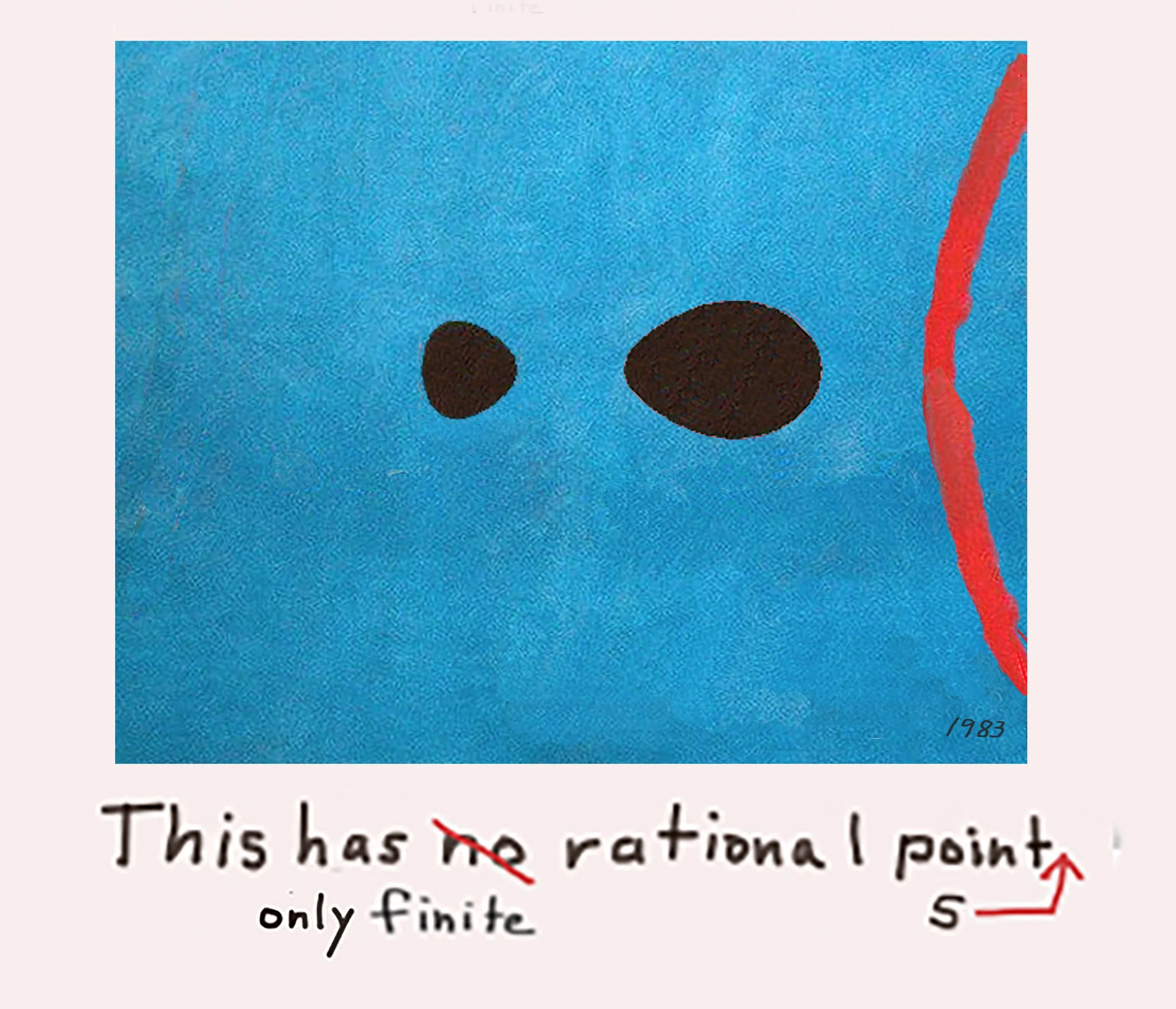
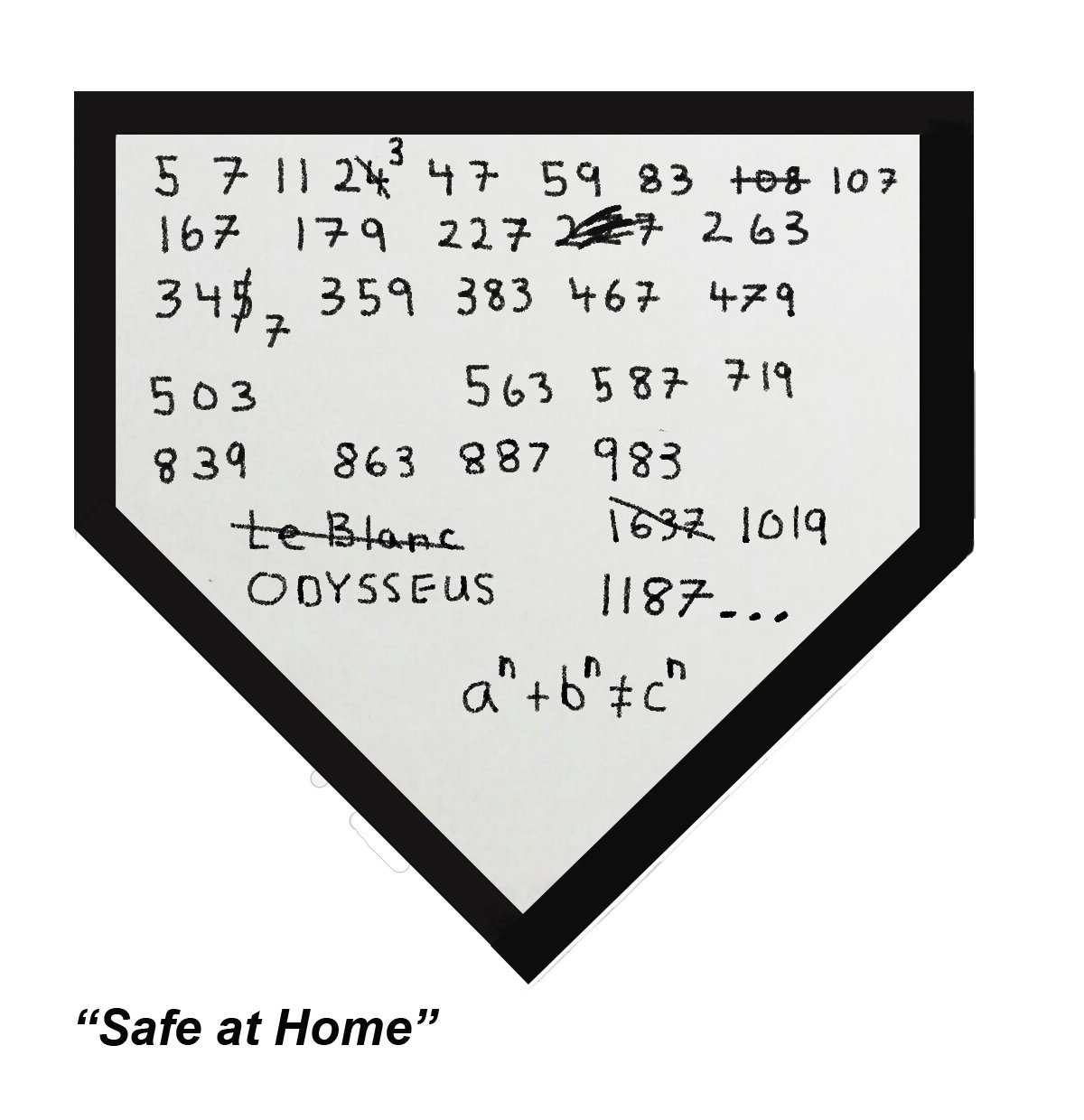
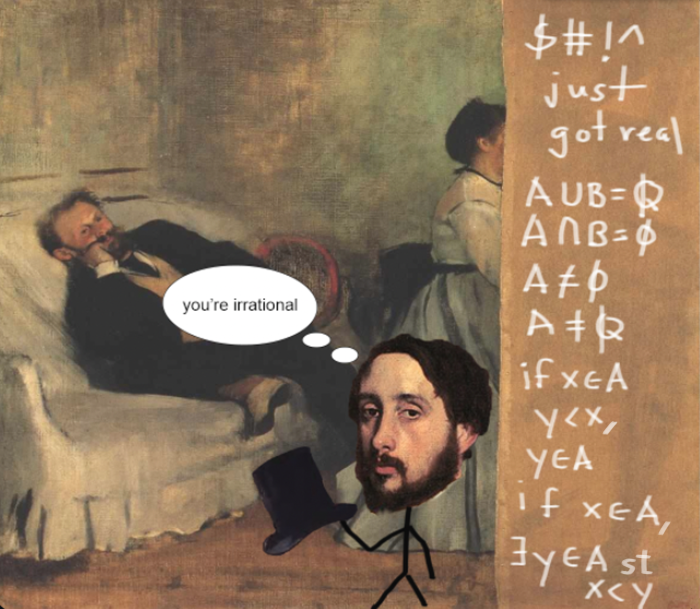
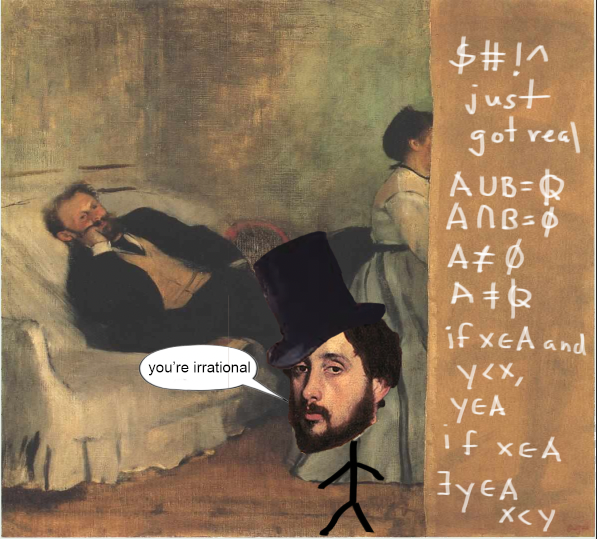
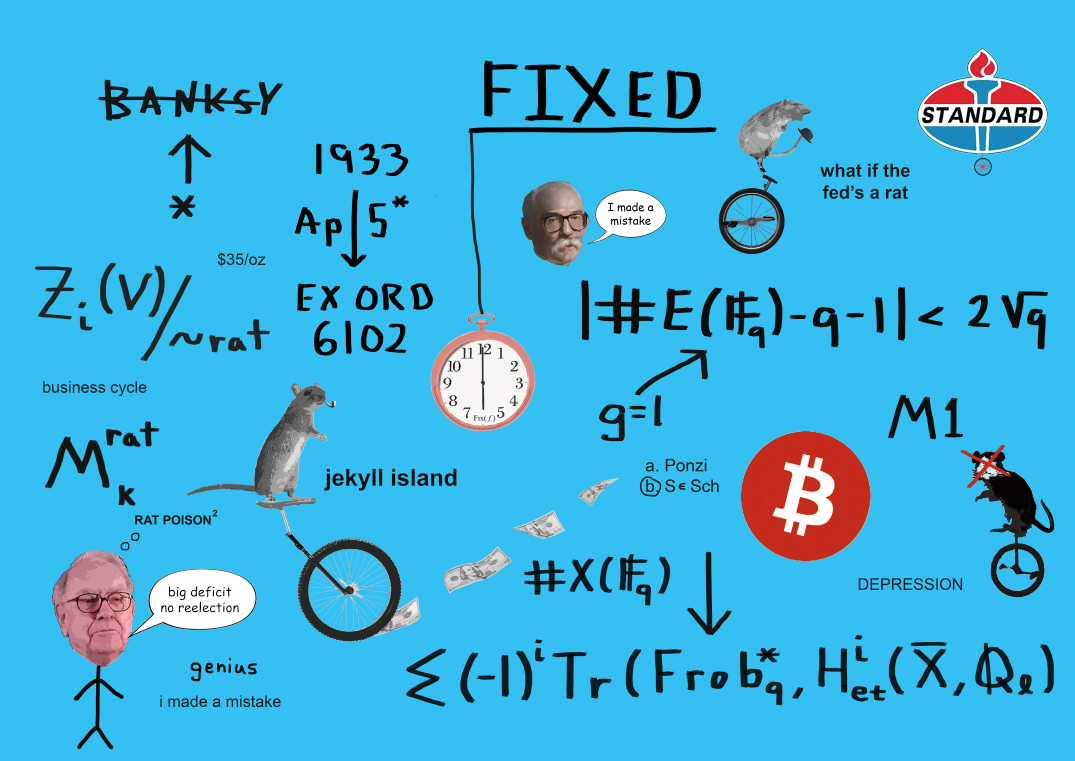
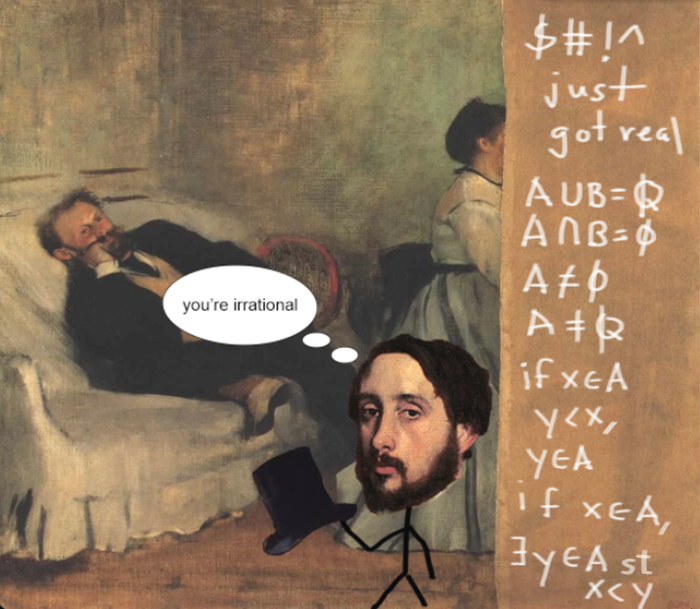
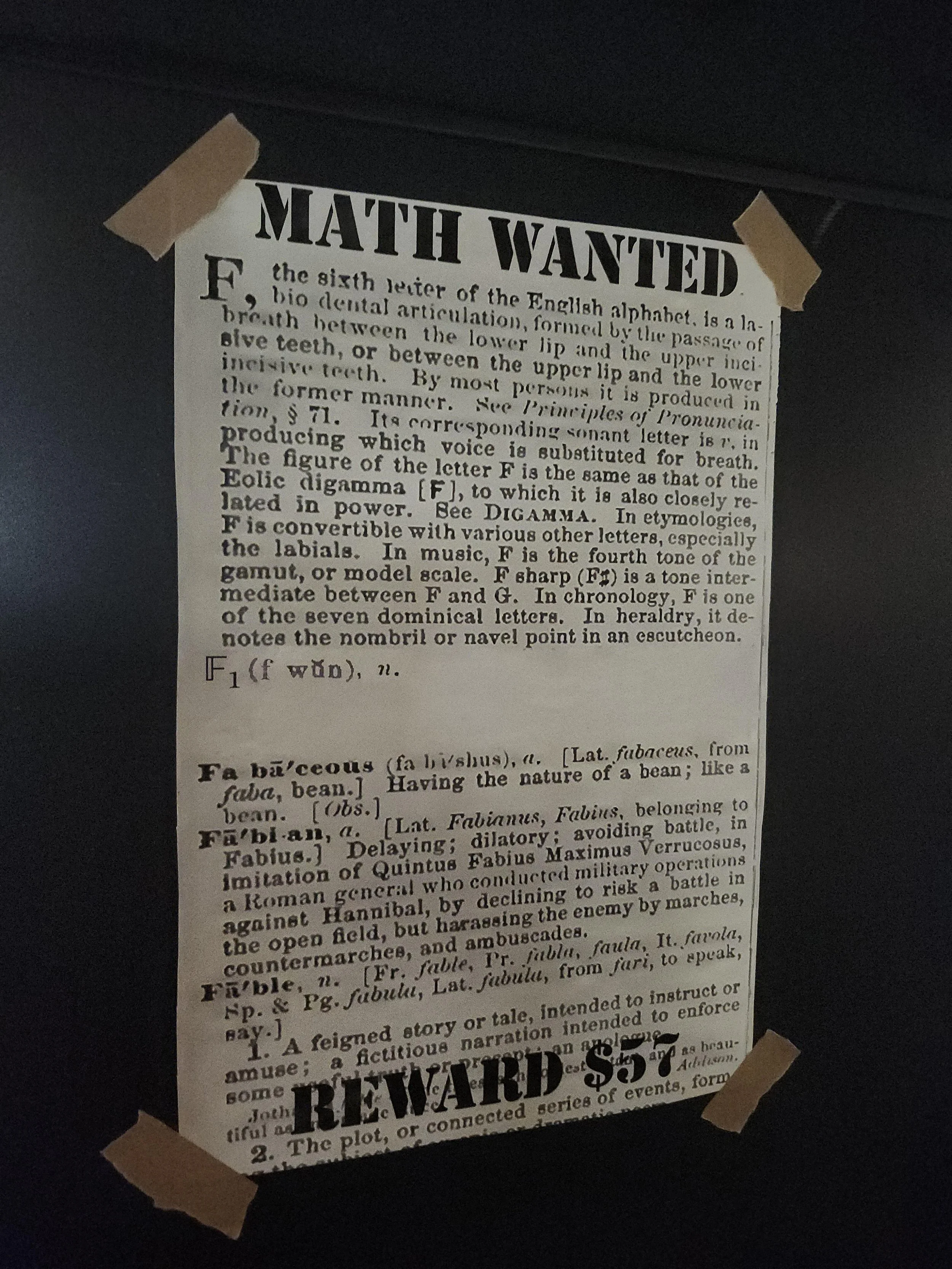
While not meant to be a complex piece but more a simple quip here is a short description of my image. Miro was a surrealist as such he "rejected" rational thought. My "fake Miro" is based on a hyperelliptic curve (they have genus 2 or greater). In 1983 (the year Miro died) it was shown that curves of genus 2 or greater have only finitely many rational points (Mordell Conjecture). So while Miro excluded rational thought from his work, the curve my "fake" is derived from has finite ration-al points. One final note Mordell made his conjecture in 1922 the same year Miro began experminteing with surre-alism.
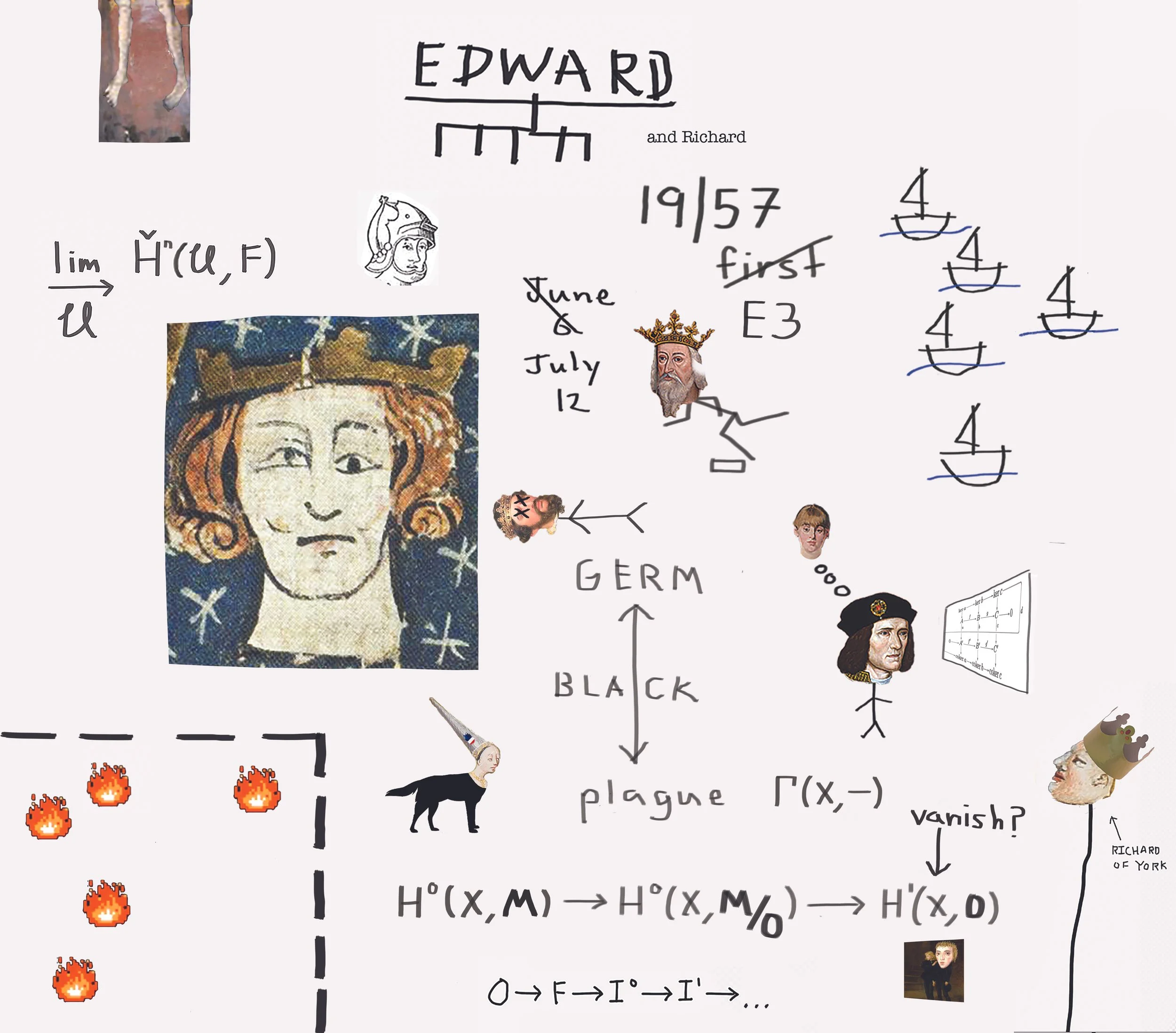
quick sketch of an installation im looking to do most likely called Breaking Donald judd's heart in the Tate. For Judd his modular sculptures were not representations. I go the opposite way. This is one of two sketches of an installation about representation (mathematical and art), abstract . included in the work are references to ideas from the proof of Fermat’s ladt Theorem including, representations Modular forms, 3-5 switch, Tate modules etc The goal was to display this for 30th anniversary of its proof. in 2024 as a sister bp[iece to this, but due to technical ones was unable to.
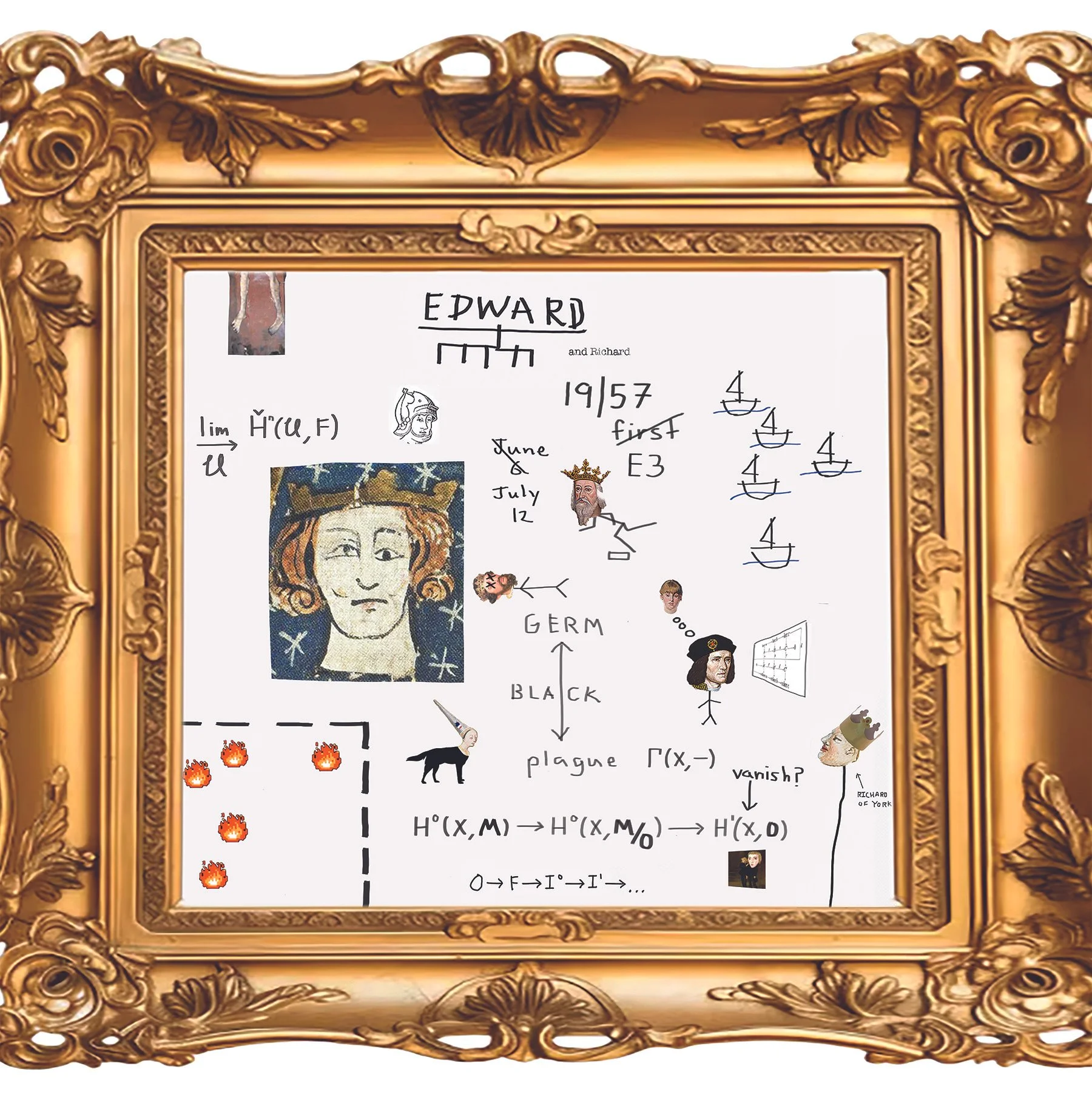
One of two sketches of an installation about representation, abstract art, through the lens of Fermats last theorem. included in the work are references to Fermats famous inscription, ideas from its proof including, representations Modular forms, R=T, theorems, weight (modular forms), etc The goal was to display this for 30th anniversary of its proof., but due to technical ones was unable to. For clarity this is a simple sketch top lay down some of the high level ideas. when really installed it would be more a stream of conscience wall writing where i would flush out more of these ideas. also for clarity the colorful cubes would really look like industrial grade modular cubes like ones you might see in a Donald judd sculpture. as i said this is a quick sketch to get down some basic placement of the ideas and materials that would be displayed. the 2 pointed to the scale means the scale would register 2. the the below image shows what would be printed on one patch of the wall.
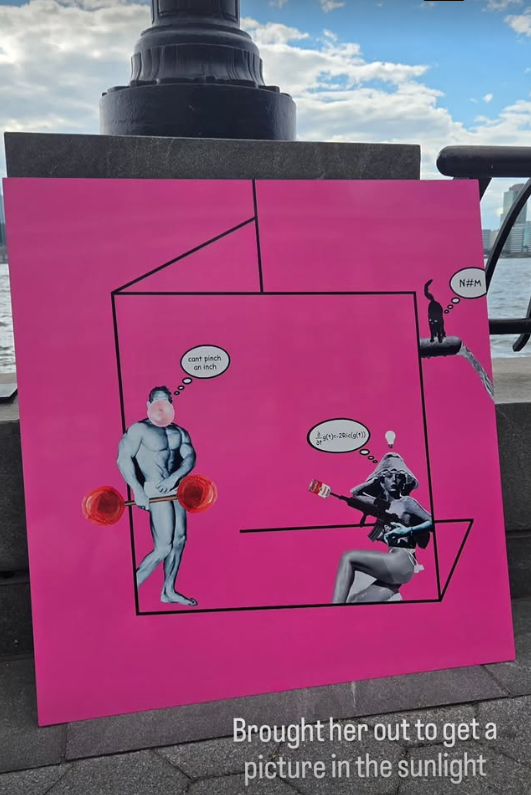
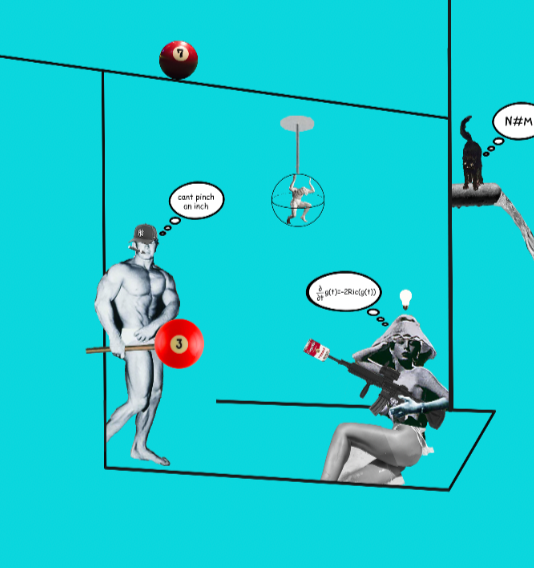
The imagery starts with pioneering pop artist Richard Hamiltons 1956 work “Just what is it that makes today's homes so different, so appealing?” which iniatiated POP art. Richard Hamilton, the mathematician of the same name, developed an important concept called Ricci Flow (which is imitates the heat equation partially motivating the title, Hot, of my work). In 1956 it was shown the generalized poincare conjecture was false. 50 years later another genius built a program starting with Ricci Flow that proved the original version of this conjecture.
One of the problems with Ricci Flow is you can get barbell shapes that eventually “pinch”. The solution to this problem was to perform surgery on the manifold before the “pinch”. The bodybuilder with the lolipop barbell says “cant pinch an inch”. Both individuals are well physiqued attractive people which points to the title Hot as well. A suppressor on a gun is sometimes called a “can”. Here that is represented with Pop artist Warhol’s Iconic Campbells Soup can. In one version the words “Suns out guns out baby”. The rest Ill leave for the reader to unpack
Footnote: One of the motivations to use an aesthetic similar to the one in my series about falling rooms featured on the tab called Name stems from the connection of Ricci Flow to Ricci tensor which is important for our understanding of gravity (general relativity).
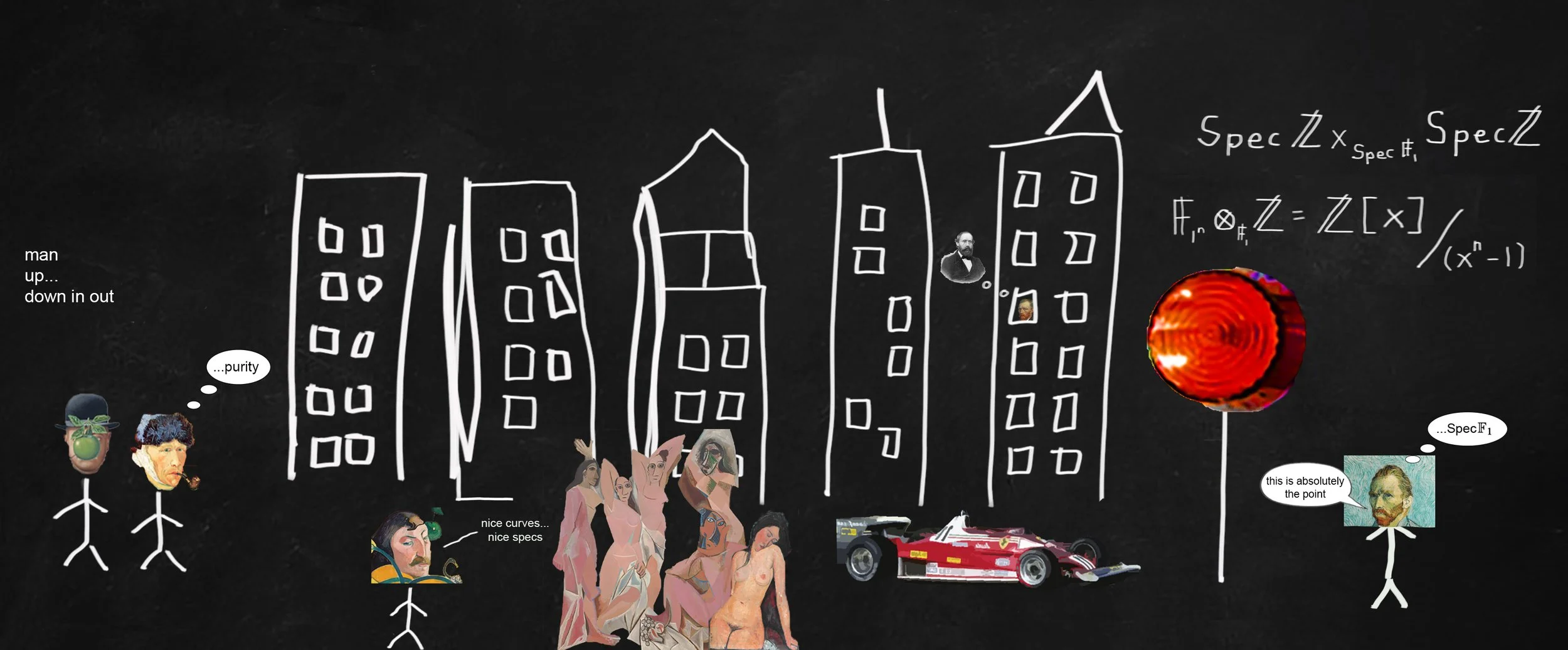
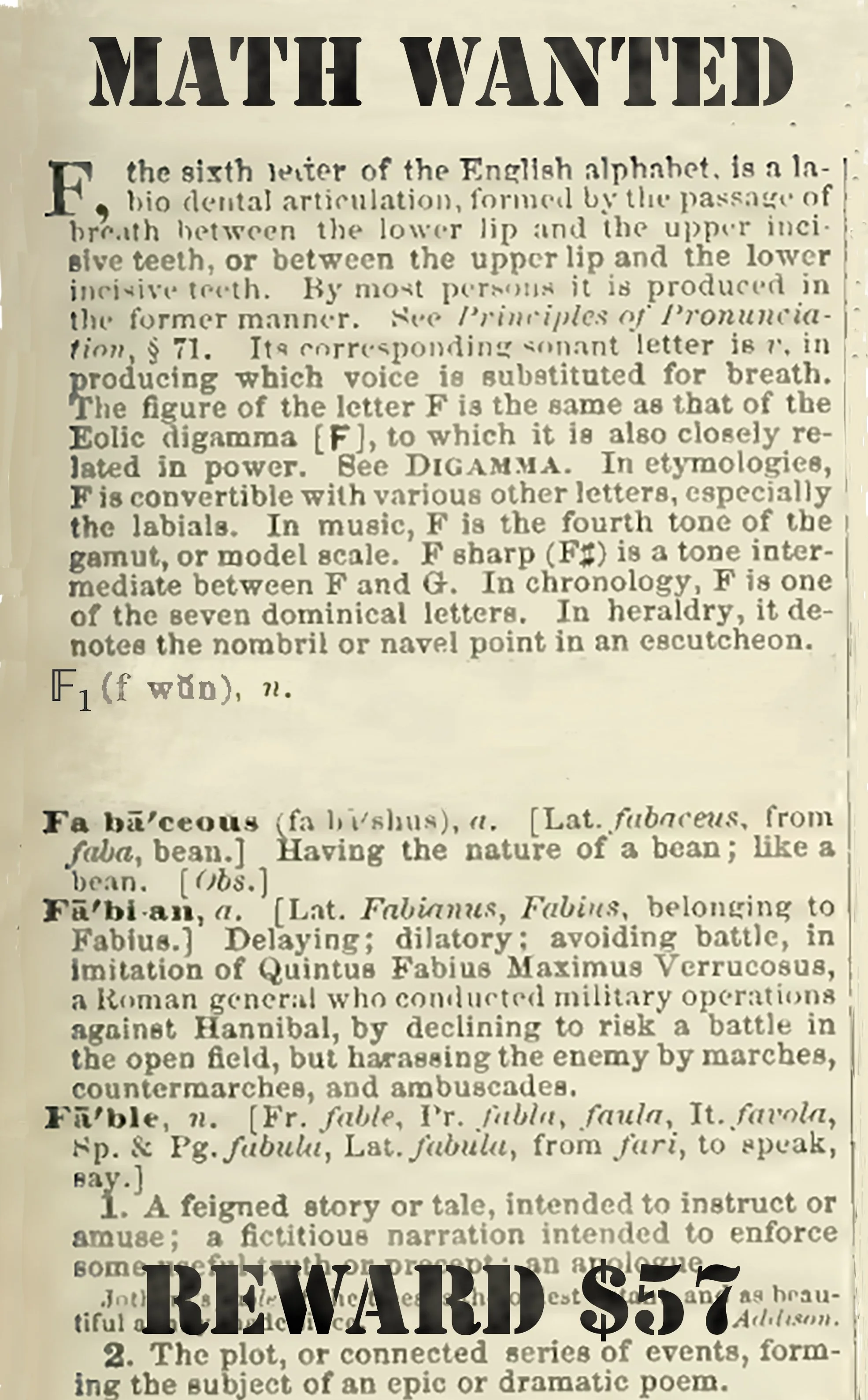
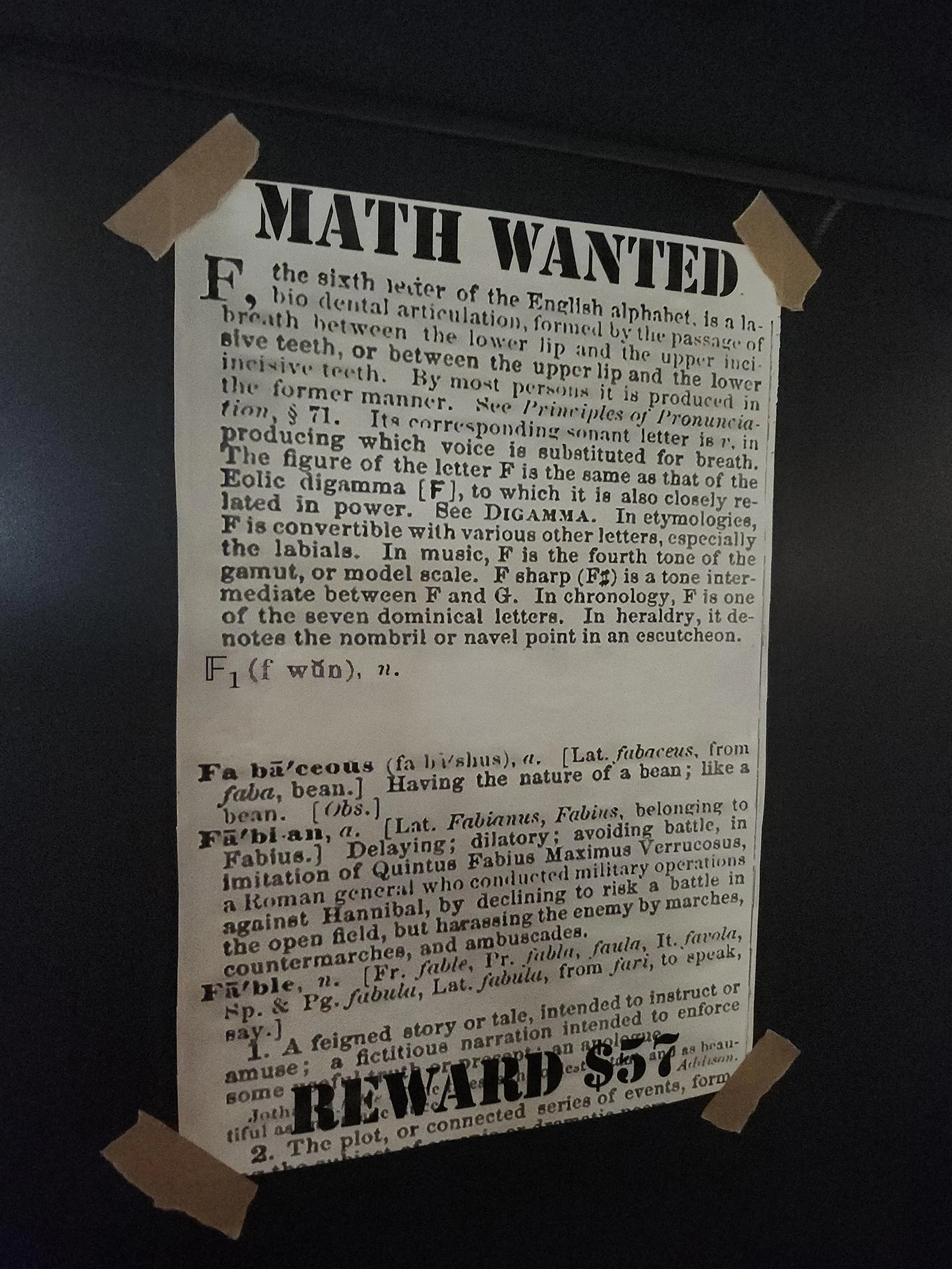
It starts with F1 (field with one element, sometimes also spelled F_un). If defined correctly and deeply understood, it gives a path to solve the most important problem in math, the Riemann Hypothesis. Curves and Spec(s) have dual meanings. Riemann, an almost otherworldly intellect (revolutionizing number theory, geometry, etc.), was also a devout Lutheran. Van Gogh went back and forth from deeply religious to carousing with hookers (a bit too much fun). His roommate Gauguin was a fantastic painter but a disgusting pig of a human taking advantage of underage women. Here Van Gogh wrestles with Riemann, hinting at the Hypothesis (and F1’s role) and the spiritual. Van Gogh can be viewed as a motive (3 variants of him one surrounded in blue curves). Motive and purity also have two meanings.
Grothendieck, who was central to the program Manin built on, and whose approach to defining F1 'correctly' is very Grothendieckian in nature, was also very spiritual.
On a final note the idea of F1 originated in Tits work on buildings.
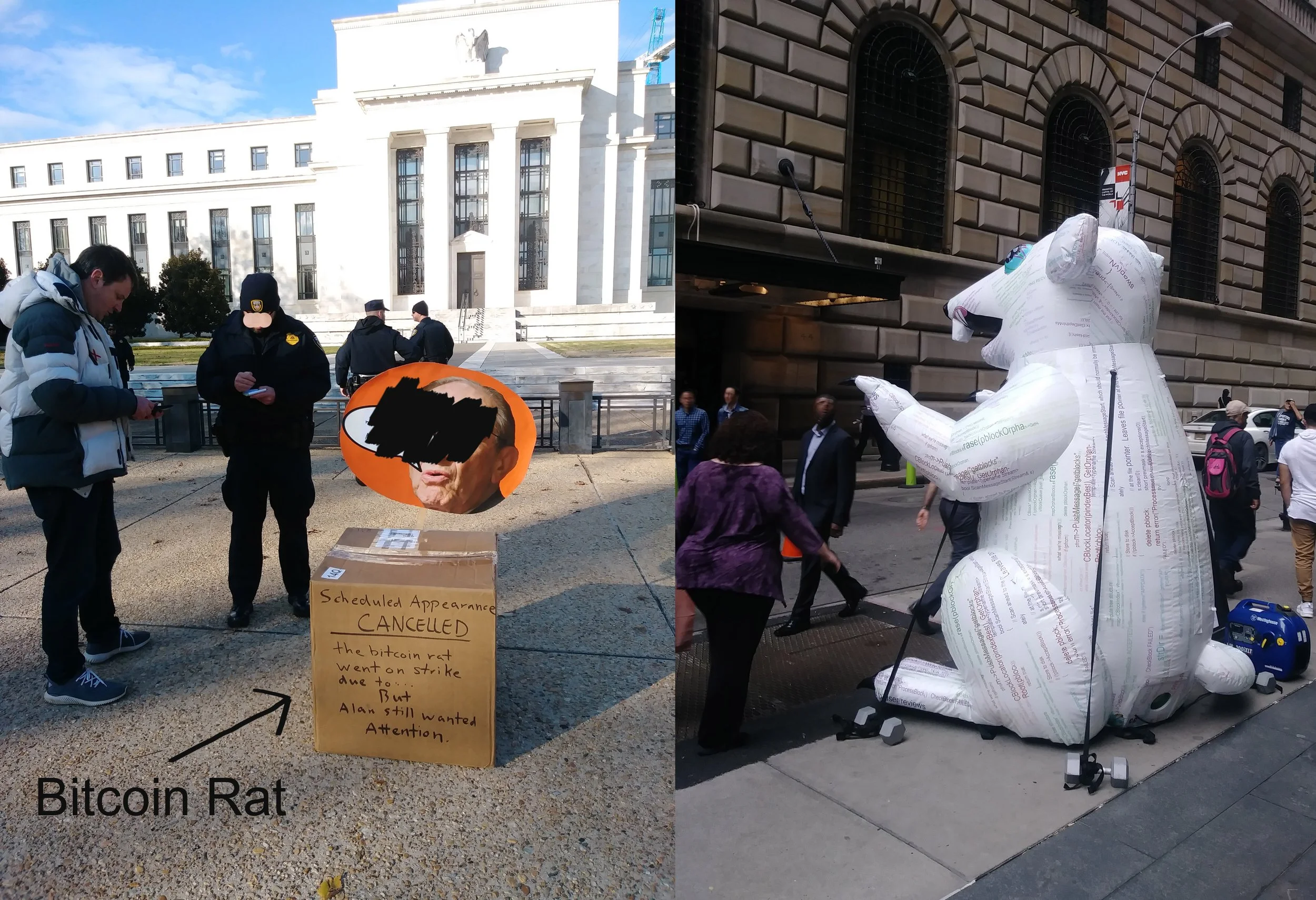
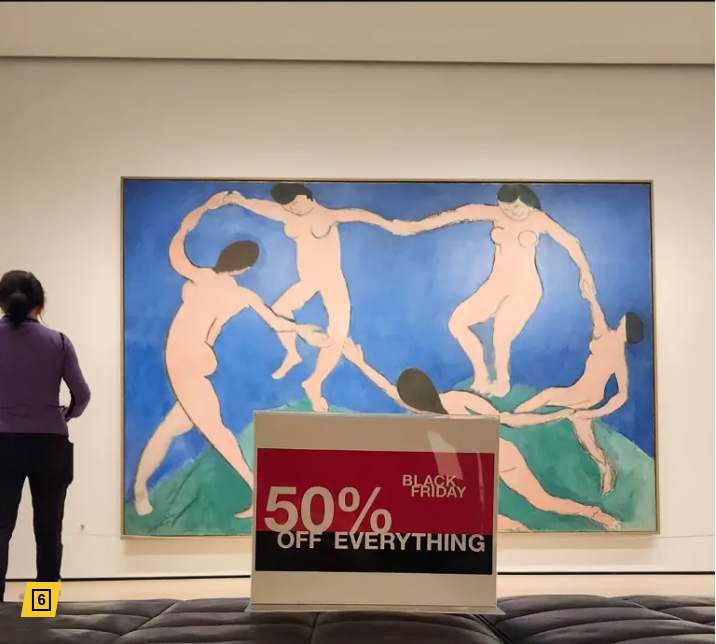
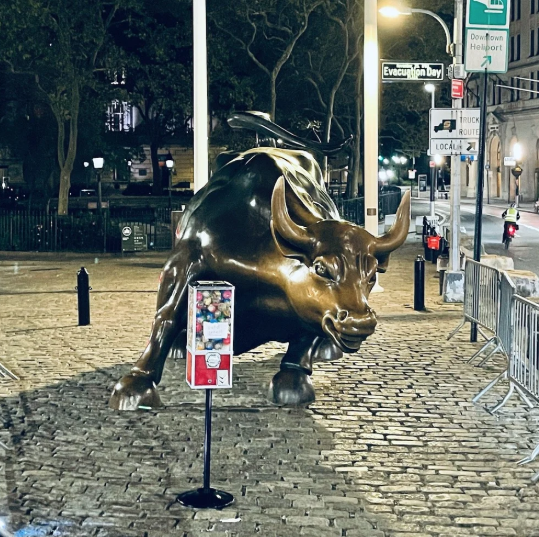
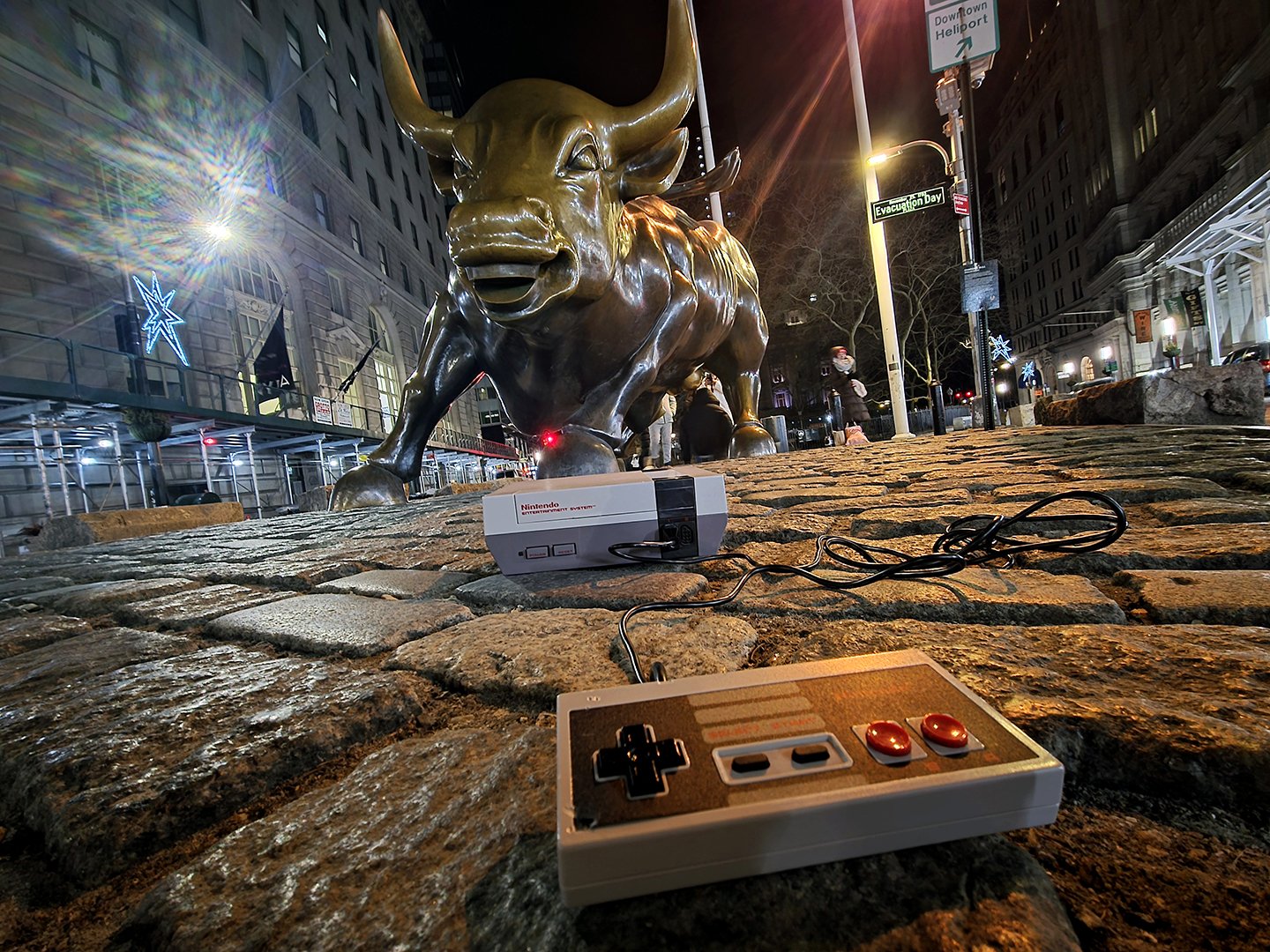
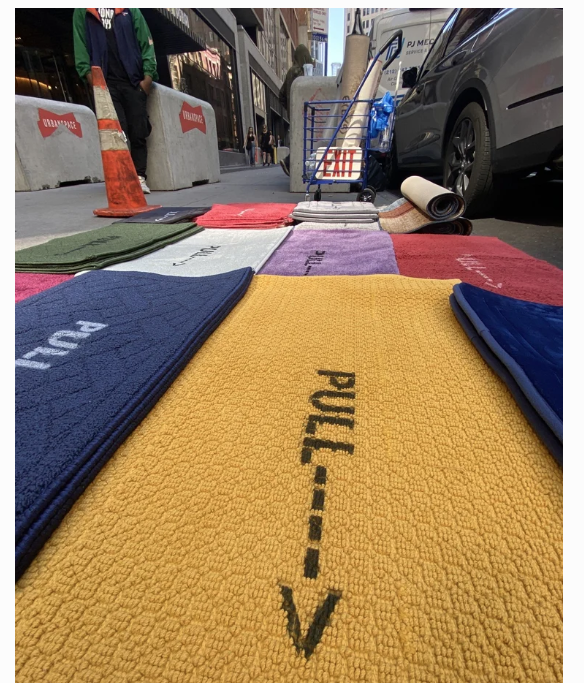
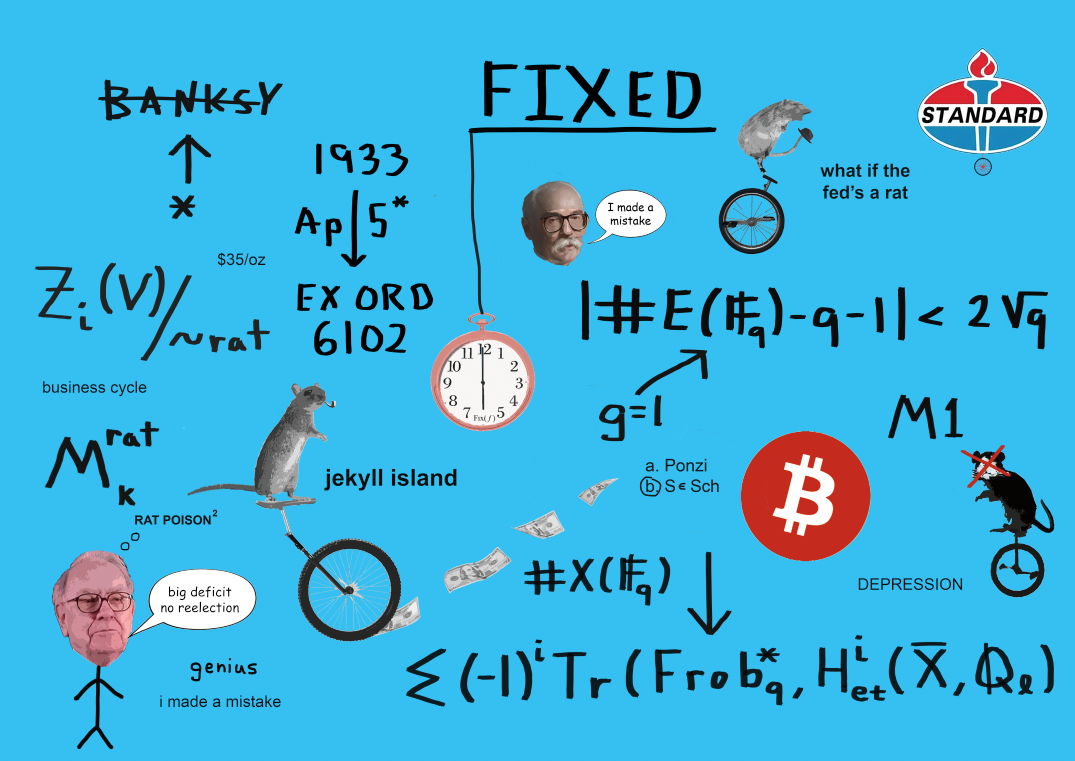
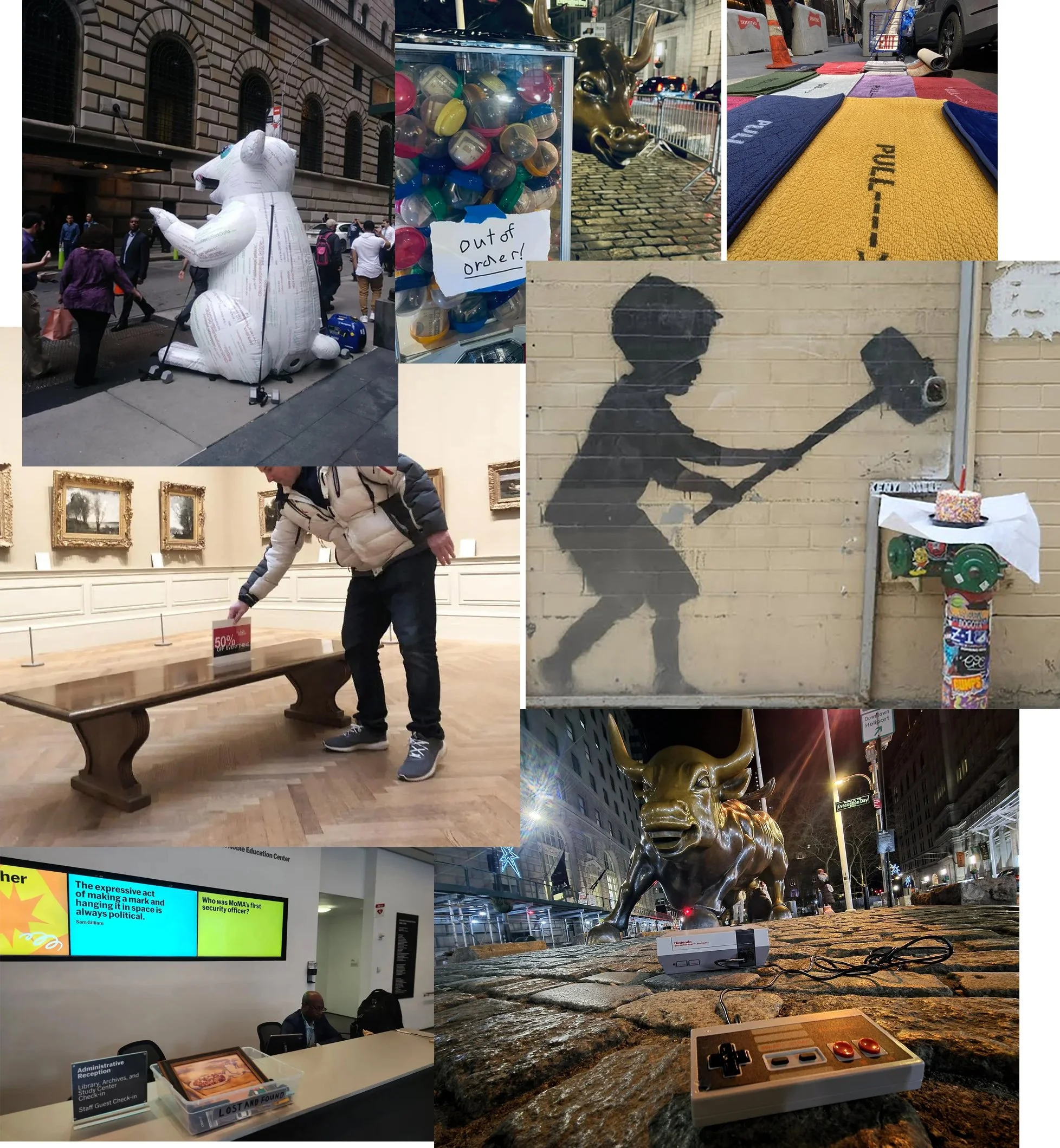
Rough draft. You can read the descriptions of many of these in the related sections especially WS1 for Wall Street themed ones:
1. BTC Rat in Oct 2018 at NY Fed and Talking to secret service outside DC Fed in Nov 2018
2. Black Friday in the Moma Black Friday Nov 2024
3.. Modified BTC at Jekyll Island where the FED was “birthed”
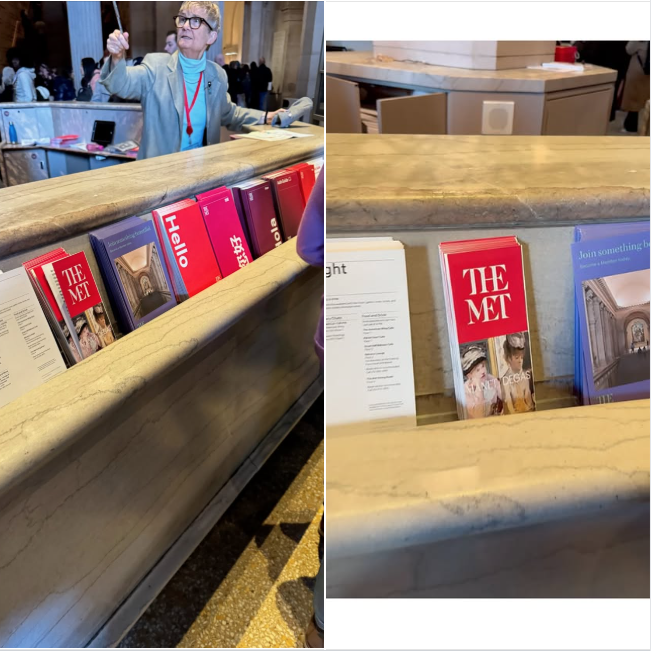
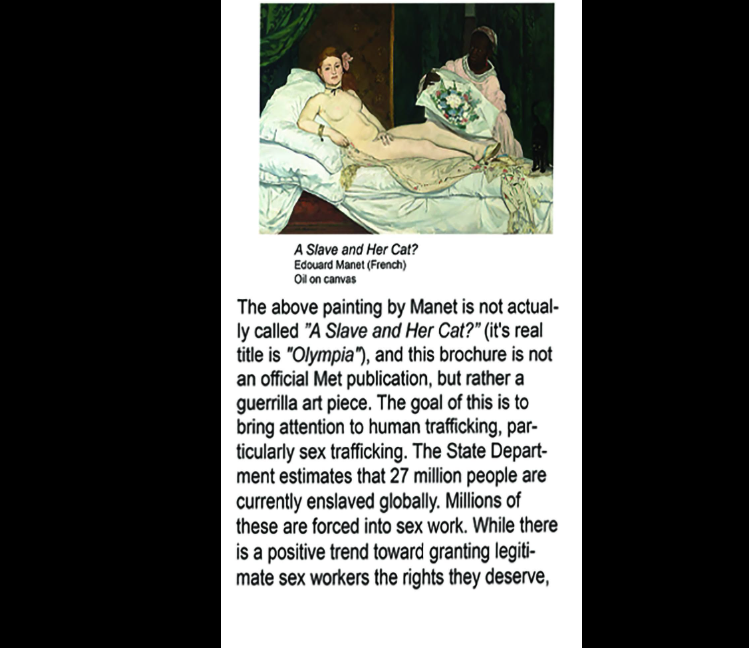
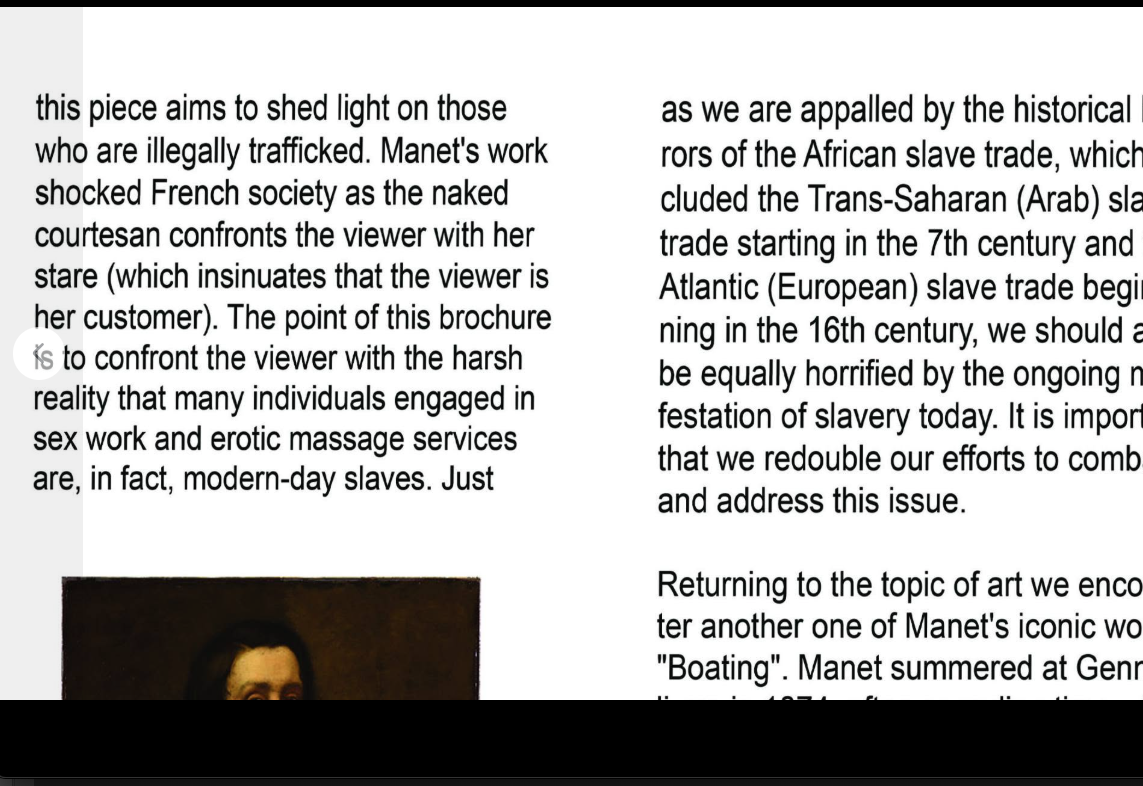
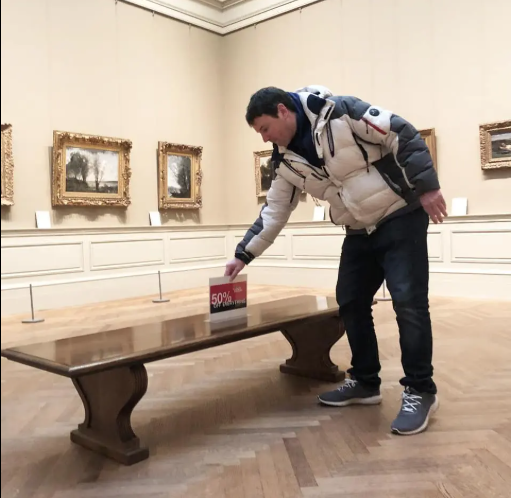
4.. Fake brochures at the Info booth at the Met on the last week of the Degas/Manet retrospective Jan 2024.
5. Black Friday Special in the Met on Black Friday Nov 2018
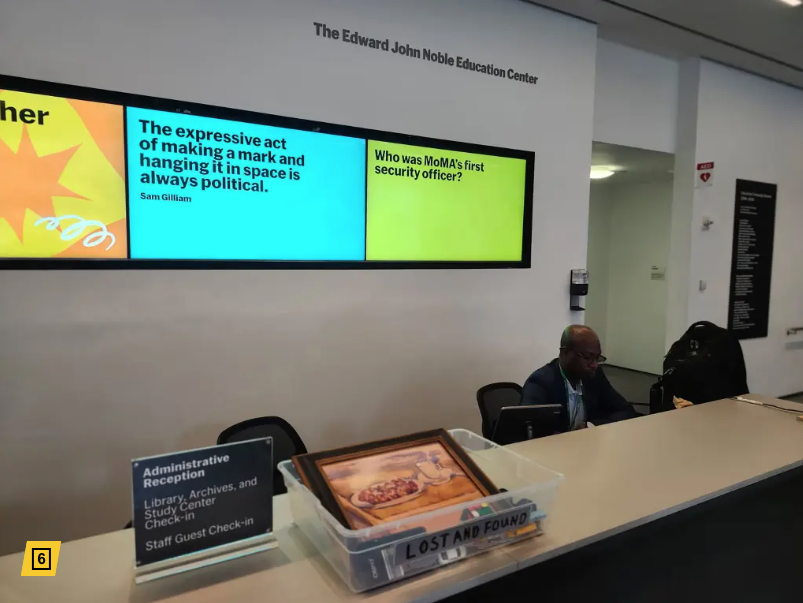
6. Lost and Found at the Moma
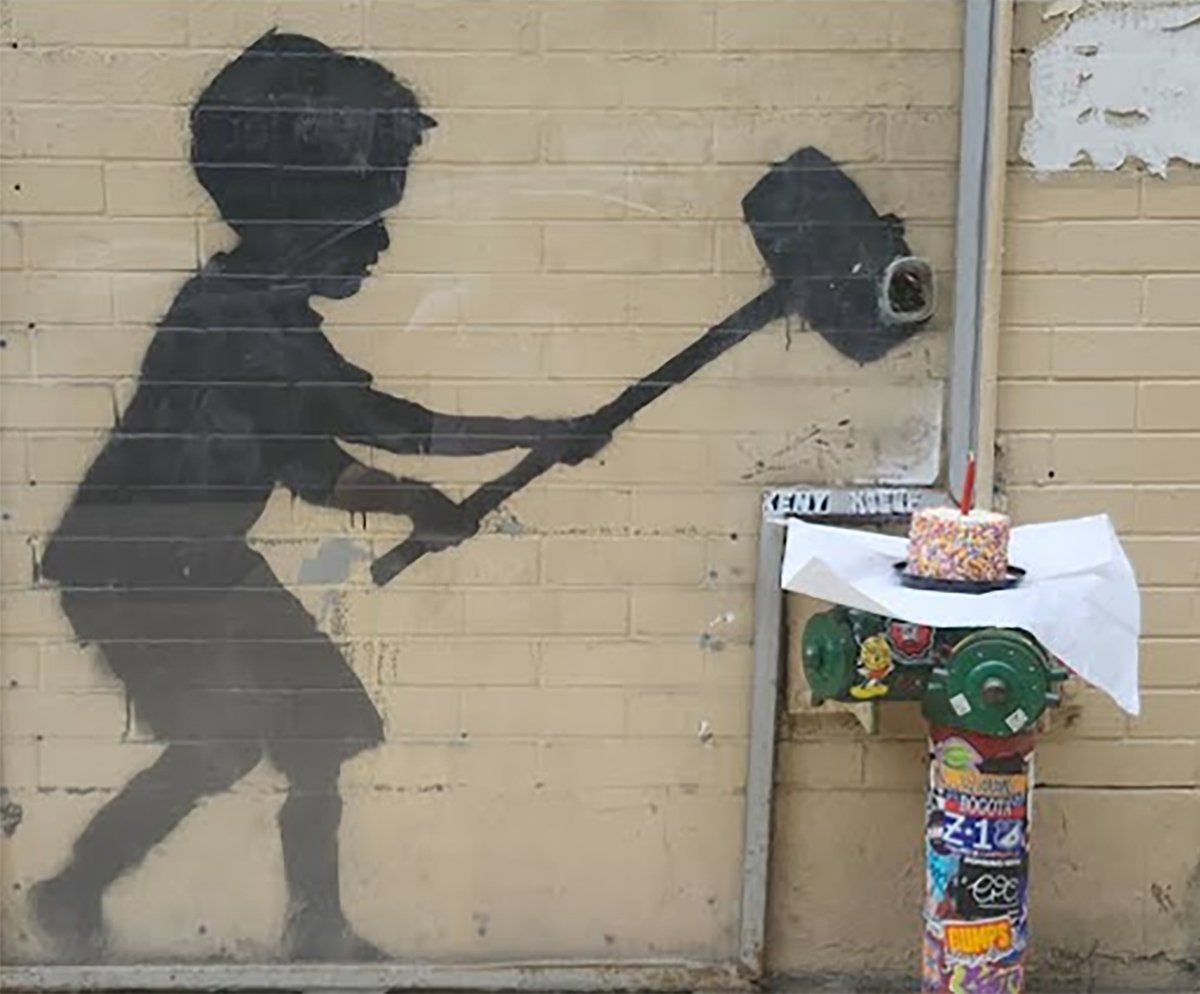
7. July 28 2026. Mini cake placed at Banksy’s Hammer Boy on his supposed “Birthday” assuming Reuters reporting is correect about his identity.
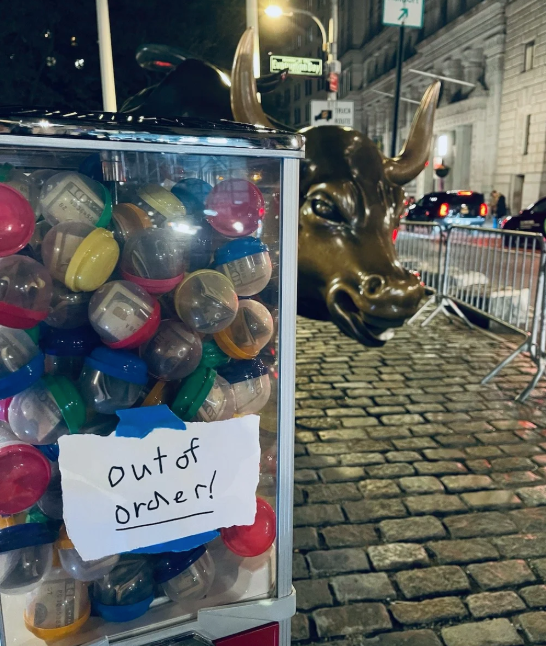
8. Cheap Money is Out of Order. (several times) Fall-winter 2021
9. Rug Pull in front of NY SEC Sep 2023.
10. Gamification on the 5 year anniversary of the GME short squeeze
High quality signed and numbered lithographs are available on this piece.
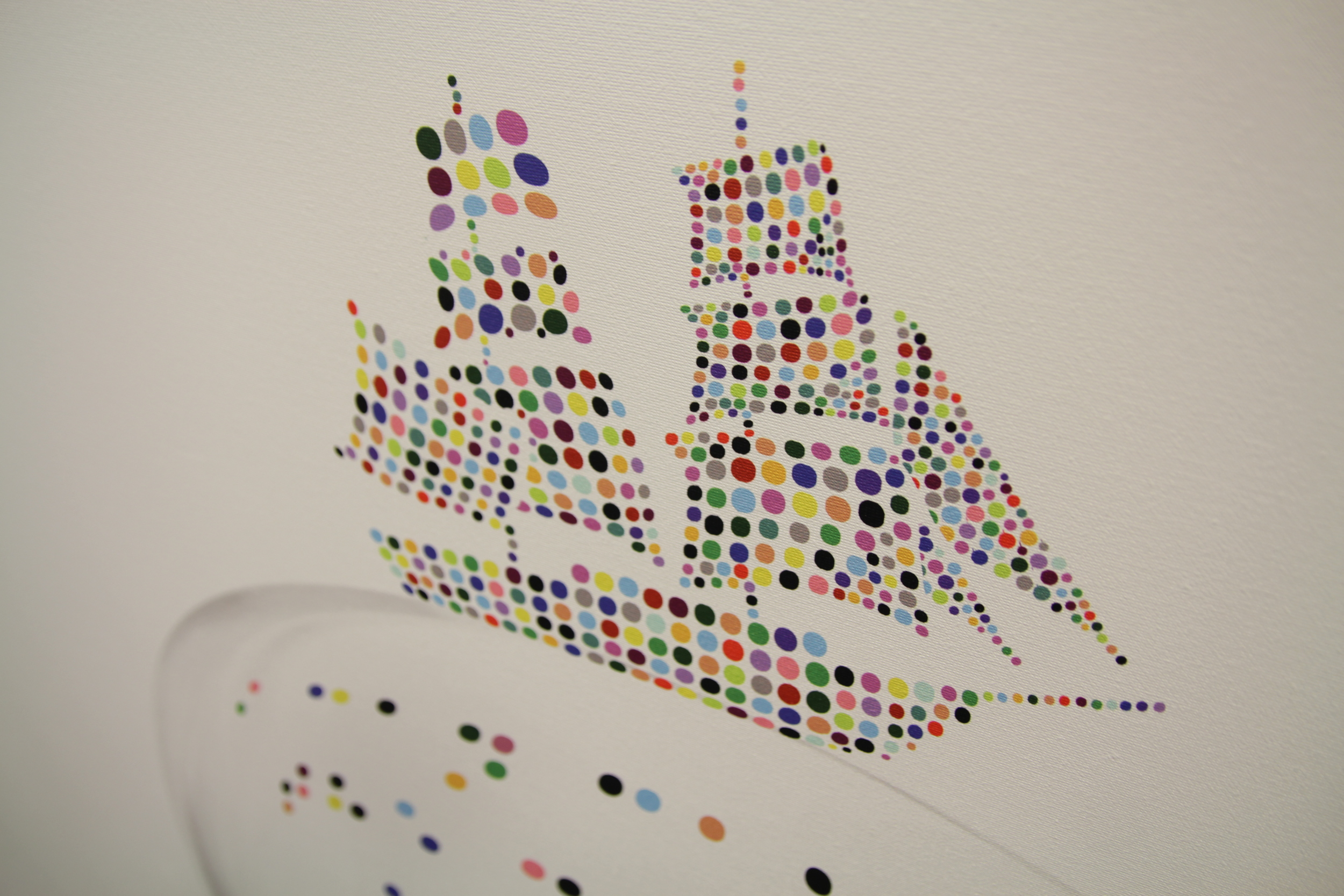
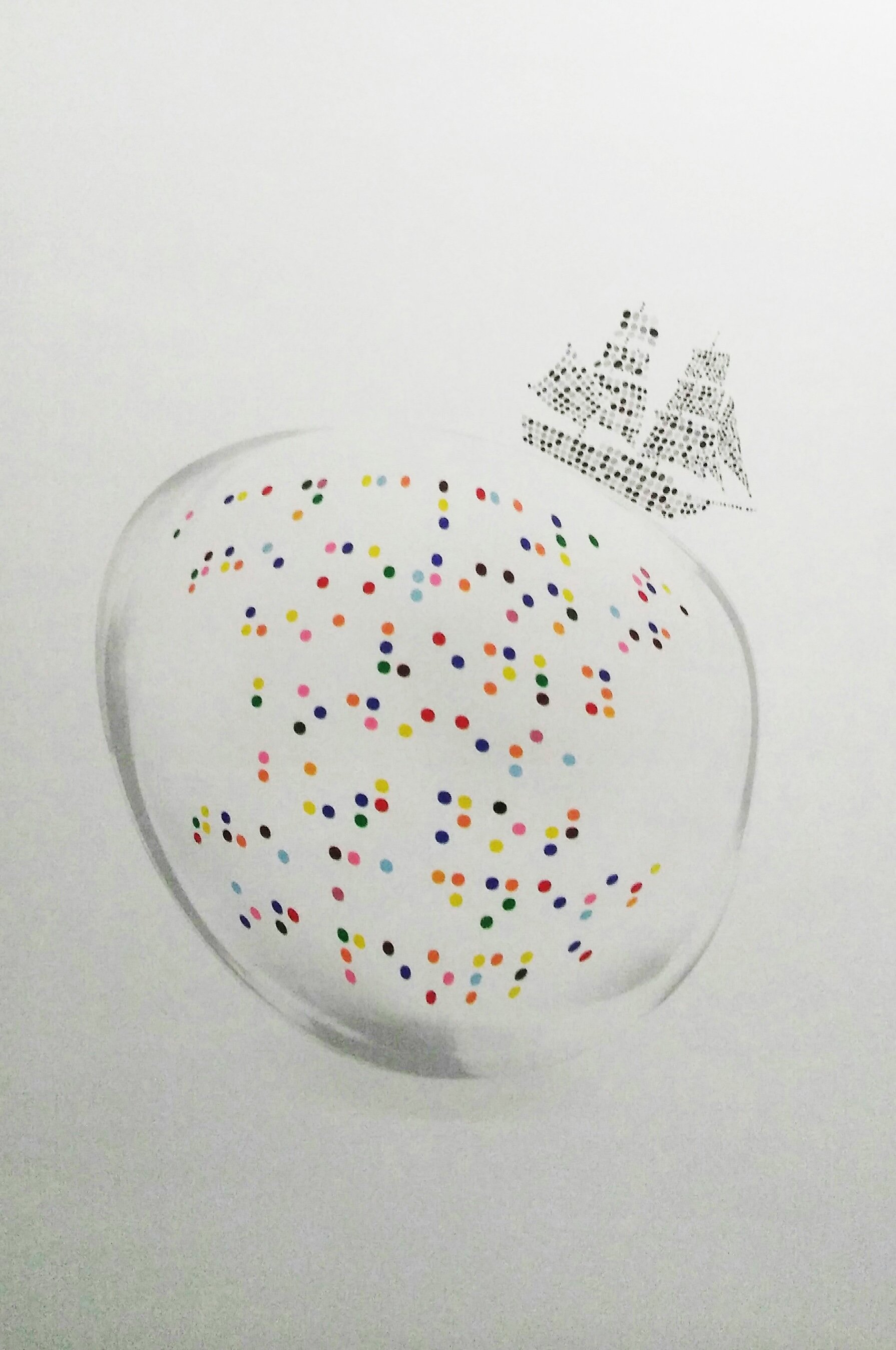
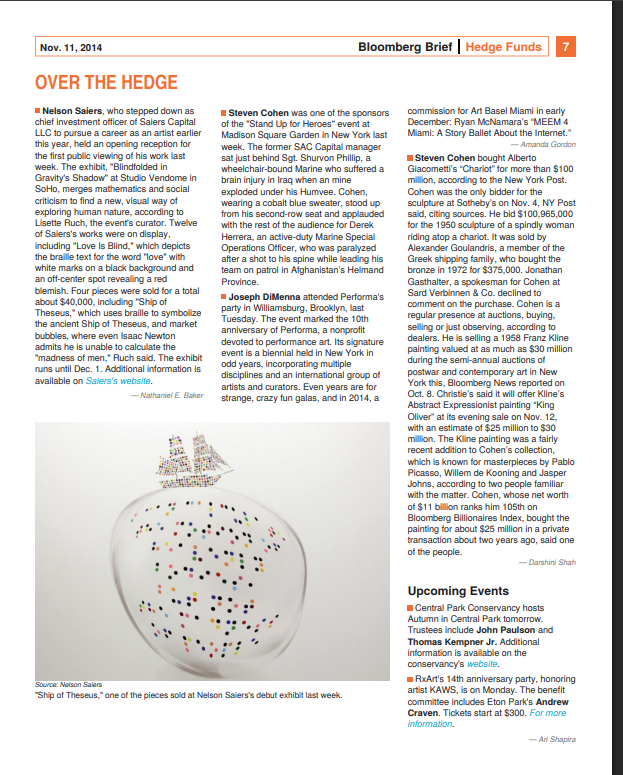
Ship of Theseus (2014). is a playful yet sinister work commenting on the state of the international art market, which is both volatile and – like any bubble – a fragile ecosystem that must be treated delicately to survive. But it also speaks to the heightened philosophical language often used to describe what would otherwise be thought of as quite mundane art. In this work its done with the iconic Ship of Theseus riddle.
Here, a translucent bubble optically encases a quote by Isaac Newton written in Braille: “I can calculate the movement of the stars, but not the madness of men." (uttered after losing a fortune on the South Seas Bubble burst). The colorful braille marks resemble spots on Damien Hirst's paintings.
Dots that match the Braille in the bubble form a pictorial Ship of Theseus, which precariously floats atop the bubble itself – threatening to collapse it at any moment. Its ominous presence brings into question the impermanence of all art, but especially of the current market environment, where art’s monetary value is hiked almost daily past unprecedented levels. More presciently, this work questions the definition of original art, recalling again the mimicked permanence of Hirst's The Physical Impossibility of Death in the Mind of Someone Living, in which a shark is suspended in formaldehyde: In reality, the shark deteriorated even within the tank intended to preserve it, and had to be replaced. If indeed the market is a bloated mass, then its greatest threat may be the refute of originality.
Notes: there are several variants of this work. One in particular has mold on it. This version in my opinion is the most interesting as thre “decay” literally speaks to the Theseus paradox. Here the original is featured on page 7 of Bloomberg Brief from Nov 11, 2014. The variant (with black dots) created several years after the original includes, well, black. the black was chosen as it has supposedly only been used once by Hirst but more importantly Blackl often hints at a crash eg Black Monday.
Metal; 48" x 48"
2014
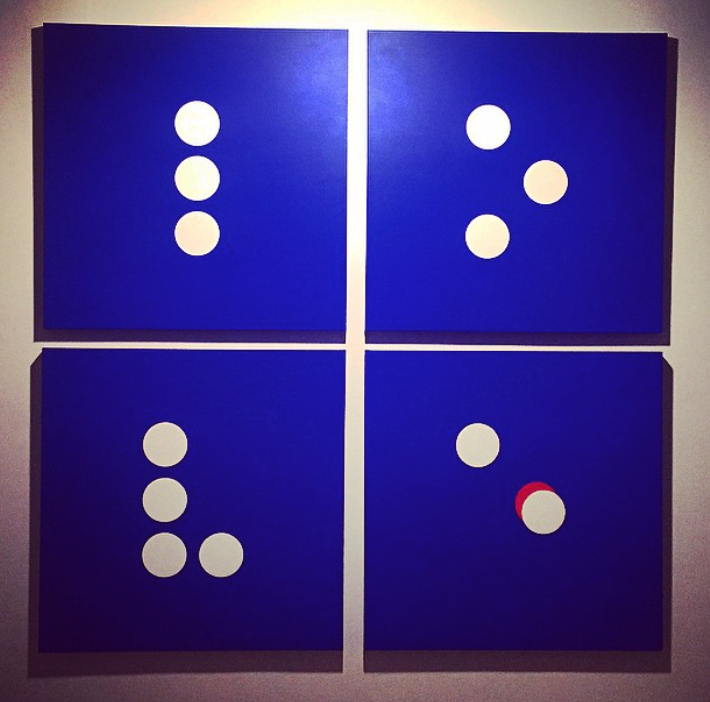
Depicting the Braille text for “Love,” this painting brings into focus the true meaning of the word. The painting appears here with white marks on a black ground with an off-center spot revealing a red blemish. The workʼs title, “Love is Blind,” is here disproved: Love in reality is all-seeing yet deeply accepting— recognizing the imperfections in others, and at the same time choosing to bear them joyfully. Here, the white spot is in the process of covering the imperfection of the red spot, demonstrating perfect love.
Notes:
Several other variants were made including the Blue version displayed in HG contemporary in 2014 and me in front of it installed the Plaza Hotel Edwardian Room in 2017.
Canvas and Acrylic Paint; 60" x 84"
This was meant as a fun quip. Manet cut Degas’ painting of the former’s wife playing the piano. This was an irrational move. Thieves at the Isabella Gardner Museum cut paintings out of the frame. Degas’ hat comes from Manet painting (Chez Tortoni) that was stolen. I cut it out of the original Manet image. Dedekind ingeniously constructed the reals by adding irrationals to the rationals with particular cuts. the math in the work essentially describes these Dedekind’s cuts.
See Hot for some background info as this is the second in a series about two Richard Hamilton’s (the father of pop art and the pioneer of Ricci Flow). A couple of quick observations about the work: it is based primarily off of Hamilton’s Just what is it that makes today's homes so different, so appealing? from 1956 but it also incorporates something from his 1992 work of the same title. A Jupiter (planet) themed “disco ball” in 1992 work is replaced in mine by a sculpture of Atlas inside of a sphere (instead of lifting a sphere up). Again this is meant as an abstract art work but at minimum it could be interpreted as a the No Local Collapsing Theorem and ingenious idea that helped Perelman use Ricci Flow to prove the Poincare conjecture. Atlas is also important as Poincare is about manifolds and a mathematical atlas is central their definition. Other possible issues that can arise with Ricci Flow are cigars represented by the cigar in the body builders mouth). A common way to fix troubled areas is to cut them out and place a cap on them.
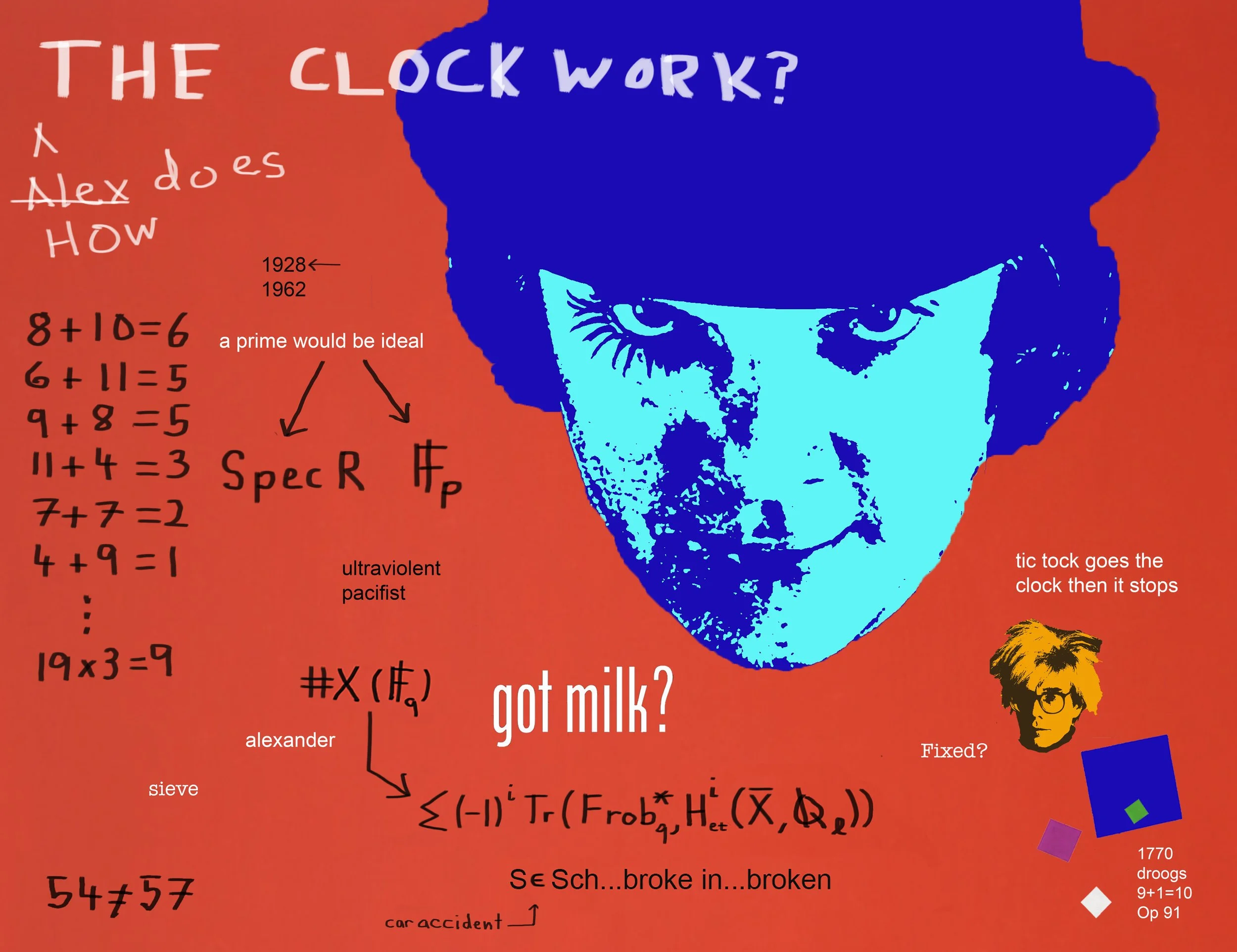
The piece starts with a question “Alex, how does the clock work?”
Mathematics on a clock is different from normal math. Six hours after 11 o'clock isn't 17 o'clock, it's 5 o'clock. In clock land, 8 + 8 = 4 and not the expected16.
On the left side of the painting are examples of arithmetic on a clock. The answers produce 655321, which it turn out is the prison number of Alex in Stanley Kubrick's movie A Clockwork Orange. Missing from this descending sequence is the number 4 (it appears to be replaced with 5)
Another Alexander referenced in the pieces is Alexander Grothendieck who brilliantly revolutionized the study of polynomials in clock math. Coincidentally, another important character in Kubrick's film, the writer, is also named Alexander.
One important aside the equations he was working with were in a world where the number 12 is replaced with a prime number.
This leads to the phrase “a prime would be ideal.” Another mathematical motivation for the phrase come from prime ideals a central object ini in Grothendieck's theory of schemes (these concepts are also in several other of my works click on links tolearn more). And scheme has another meaning in the film: Alex uses a scheme pretending there's been a horrible car accident to convince F. Alexander's wife to open the door.
57 points to Grothendieck famously thinking 57 was a prime number .
Studio 54 is a famous club where Warhol would hang out, but here it is written Studio 57 hinting at Grothendieck's mistake and also refernciong the missing 4 which was replaced by 5 in Alex’s prison number.
Doubling 57 gives 114, the number given to the serum injected into Alex during his treatment.
4 also refers tp Alex and his three droogs group of four. The number alsohints at number theory’s four-square theorem, which was proved in 1770, the same year Beethoven was born. Beethoven's music plays a central role in A Clockwork Orange.
The whimsical number 1928 turns out to give a simple way to summarize the key subjects of the story as it is the year Stanley Kubrick, Andy Warhol, and Alexander Grothendieck were born. A fact i previously pointed to in my 2020-1 work Outside the Box.
Finally, we come to a cnetral question in art: abstract versus representation.
Kandinsky regarded music as abstract art and analgousl;y thoiught painting could break ftom merely representing objects from this world. Malevich went another direction with his famous “square” works.
There are counterexamples to Kandinsky’s assumption about music being not representational. Take Beethoven's “mistake ”Wellington's Victory (Op. 91). It intentionally portrays the the sounds of battle.
Similarly, the four squares suggested by Lagrange's theorem are illiustractions of mathematical objects. But could these squares also represent Alex and his three droogs? Something seemingly abstract can simultaneously become representational. ( iwrestle with this concept alot in works such as Stack, Not Representable, etc)
There are two versions of the work. The second replaces Beethoven's Op. 90 with Op. 125, (9th Symphony which was very central to the movie).
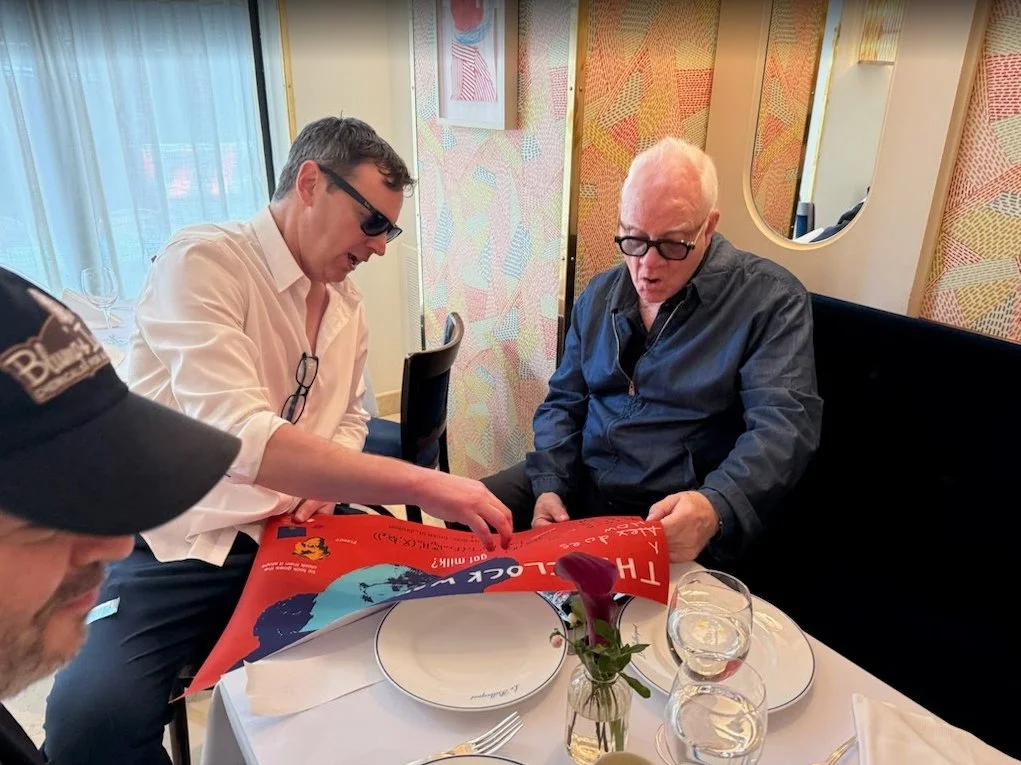
The second image is me showing Malcolm Mcdowell, who famously played Alex in the movie, a small picture of the work at lunch. The real pieces are much larger and screen printed on heavy wood.